58
Survey responses collected
14
User interviews conducted
50+
Field observations
Gold
Indigo Design Award 2021
222 Solutions was created in a hybrid setting during the COVID-19 pandemic. As Project Lead, I directed the research, design strategy, and team — and personally led UI design, branding, vision video, and content strategy. I helped create both low-fidelity iterations and high-fidelity mockups.
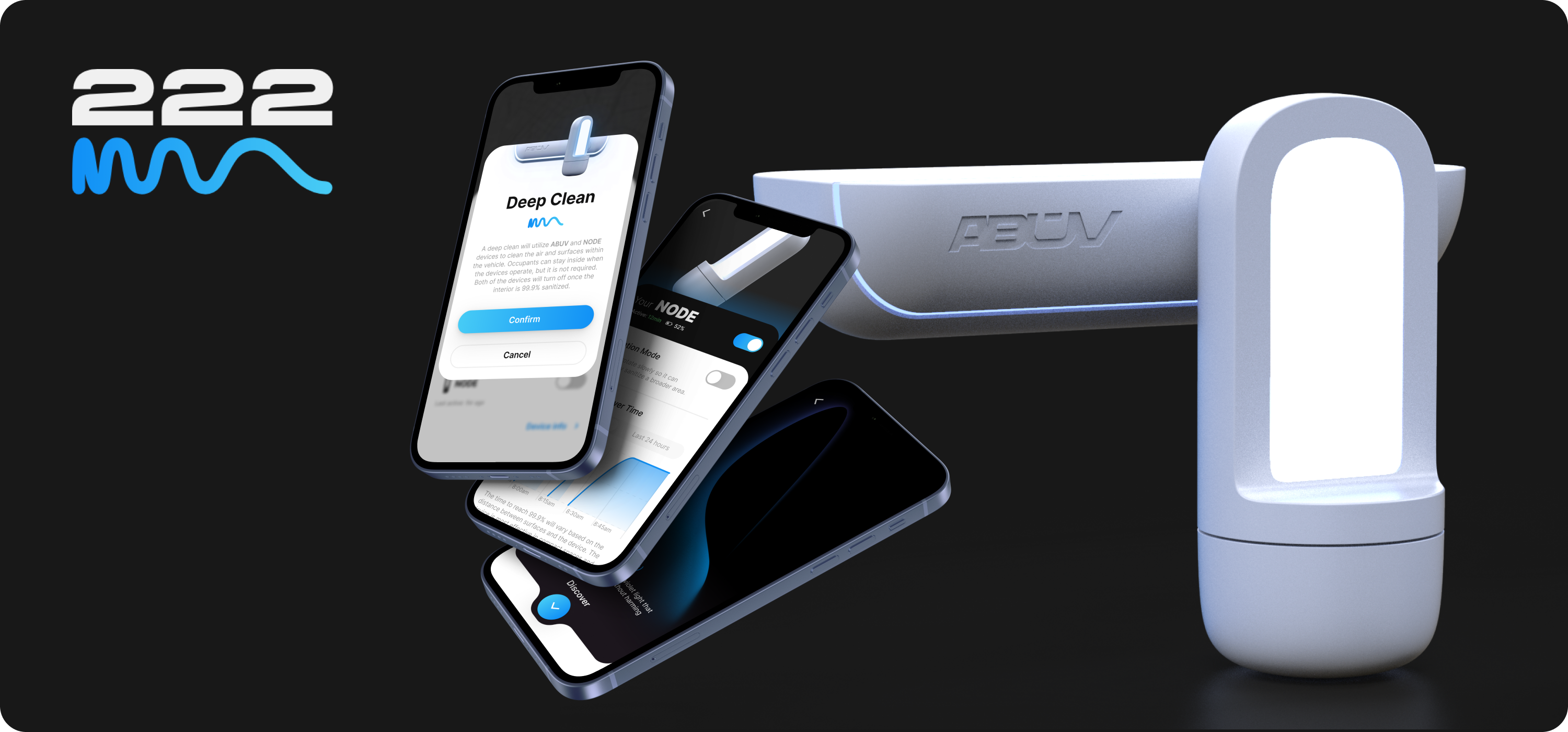
The result: a far-UVC sanitizing ecosystem comprised of two physical devices — Node and Abuv — that give rideshare drivers a harmless, intuitive, and effective tool that promotes a clean and comfortable vehicle environment.
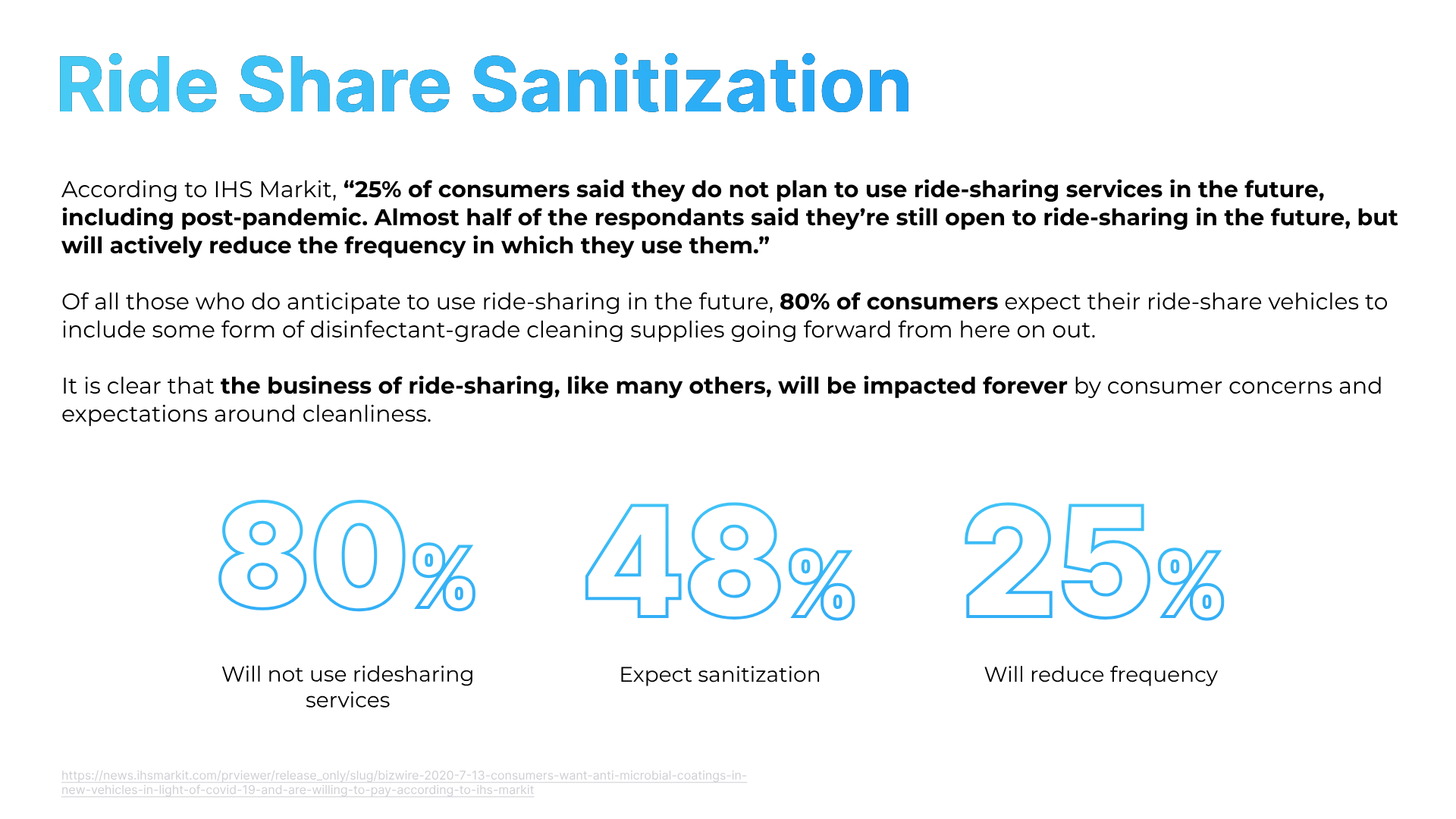
In 2020, the COVID-19 pandemic fundamentally altered daily life. Among those most impacted were rideshare drivers, who faced the challenge of ensuring vehicle cleanliness to protect themselves and passengers — with little to no support from rideshare platforms.
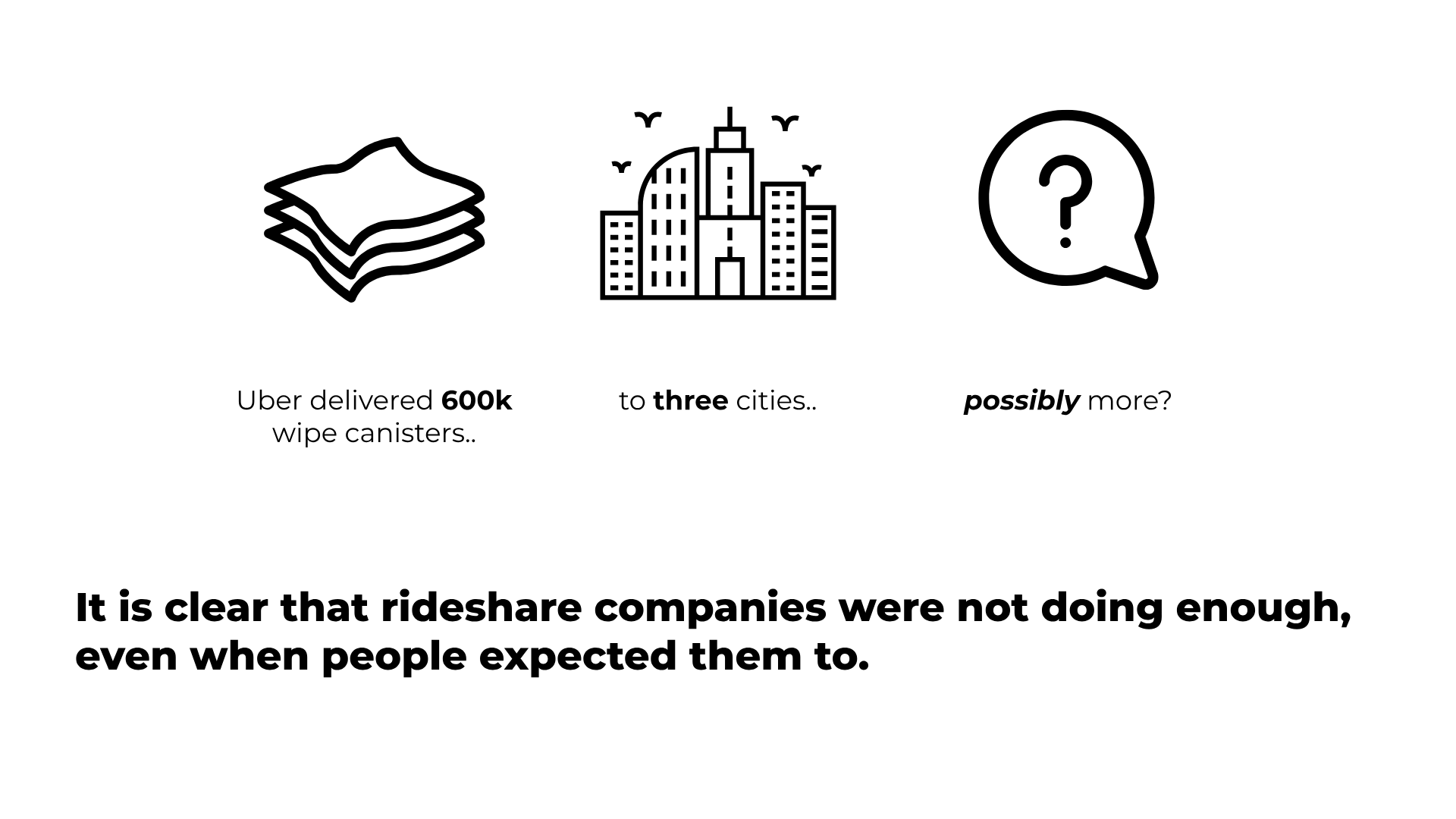
Uber and Clorox launched a partnership that sent 600,000 wipe canisters to drivers across three cities. But constant use of cleaning chemicals causes wear on leather, cloth, and plastics — the permanent damage of a vehicle’s interior over time. Drivers needed a better solution.
The gap
Primary research takeaways
Hygiene habits
People feel that improved cleaning habits and sanitation precautions should stay long after the pandemic ends.
Visible effort
People like seeing active mitigation efforts — passengers want visible proof that a vehicle has been cleaned.
Interior challenges
Cleaning a car interior is important but difficult to perform consistently. Chemical cleaning also degrades materials over time.
Financial pressure
Rideshare drivers hold multiple jobs to survive. The solution must be low-effort and not add time or cost.
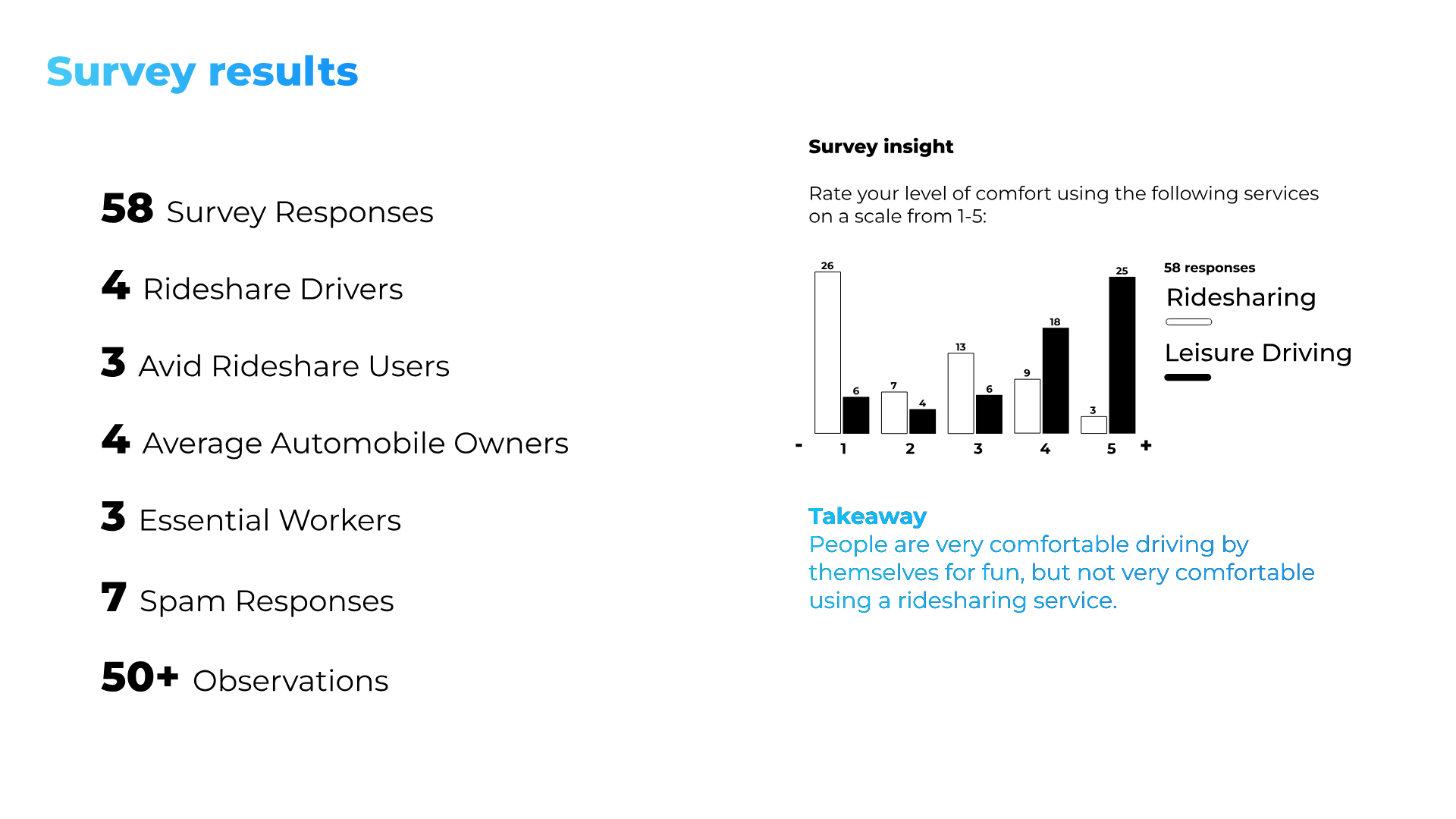
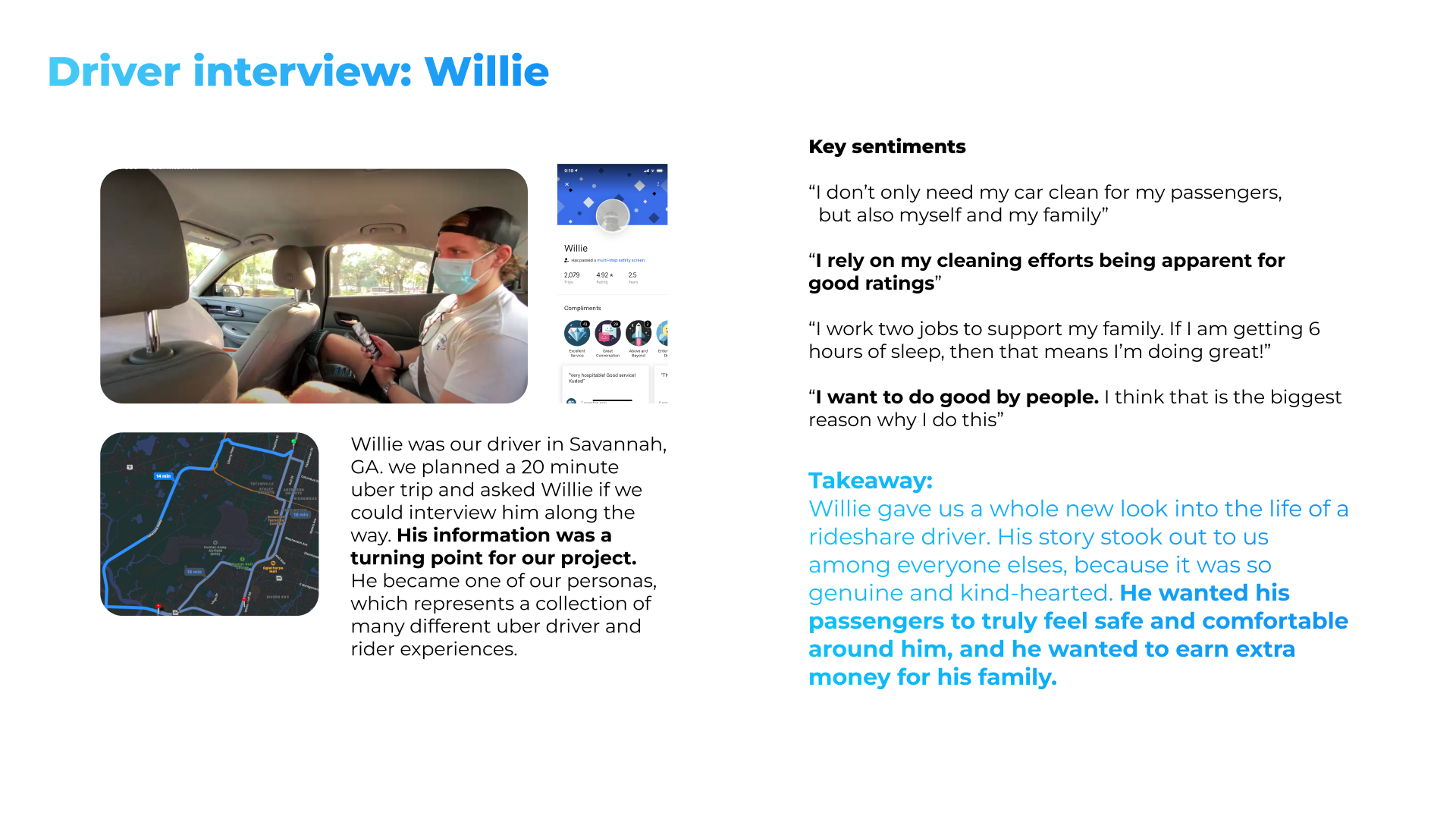
The team collected 58 survey responses, conducted 14 interviews, and made 50+ observations. Interviews were conducted with rental car users, daily commuters, rideshare users, and food delivery drivers. We conducted in-context interviews with active Uber drivers during prepaid trips.
Research documentation
Journey map
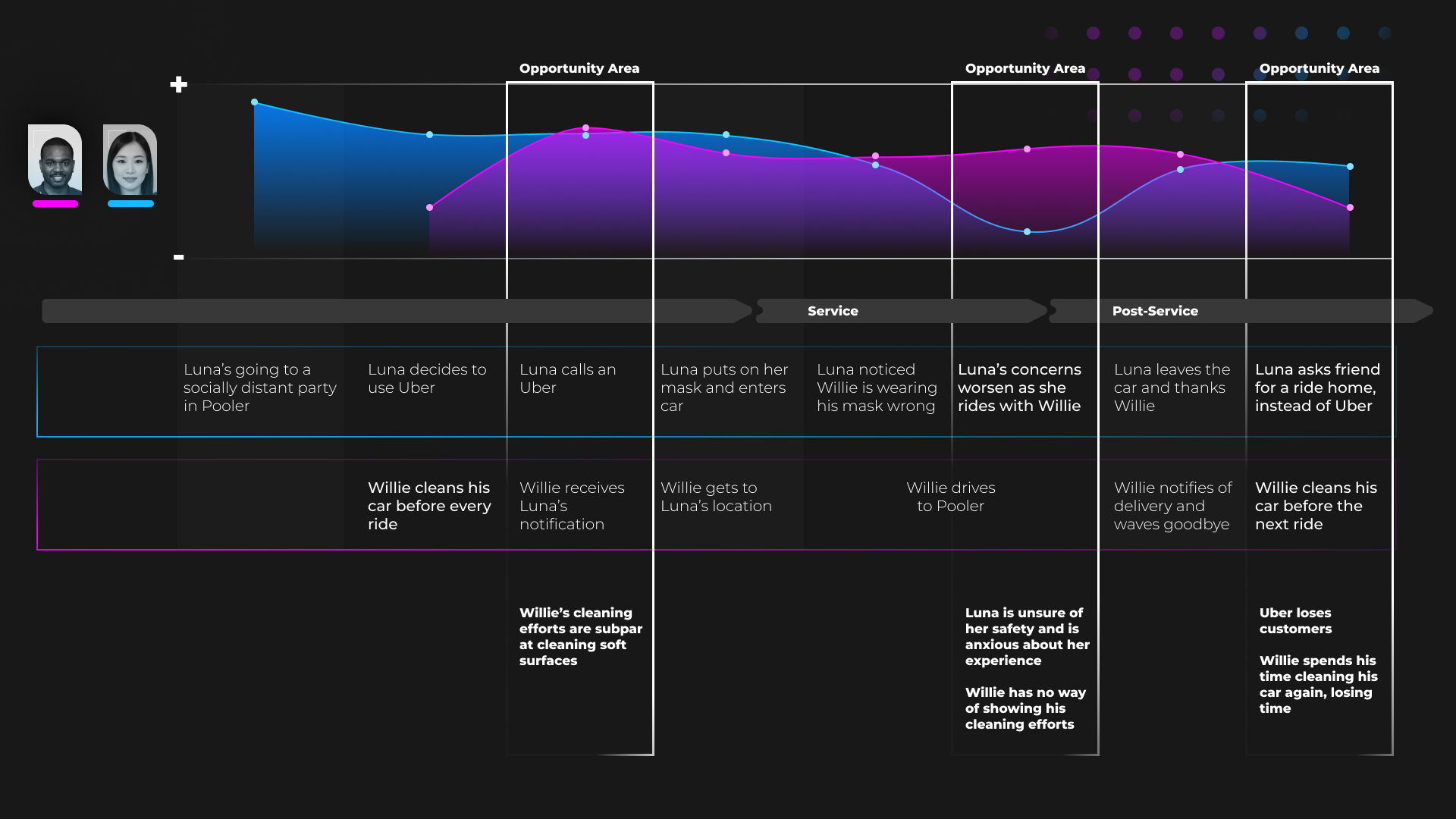
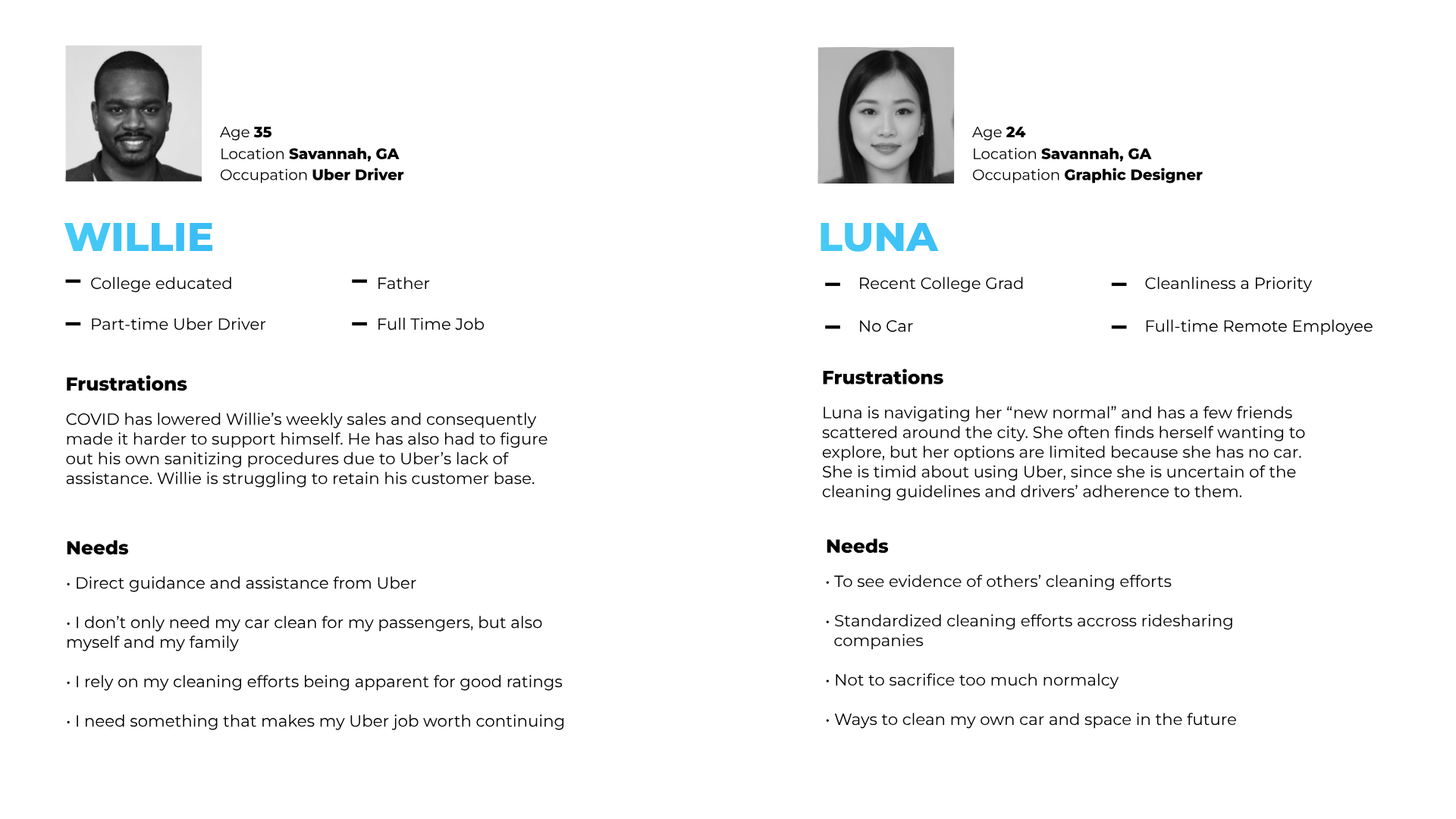
From the research, personas, and journey maps, I led the team to define 8 design pillars to guide the product and brand.
-
Works fast — while driving and between pickups
-
Safe — would not harm passengers
-
Effective on all materials found in a vehicle
-
Provides a visible cue that it is working
-
Does not degrade the car interior
-
Works automatically and manually
-
Notifies when effective
-
Mutually beneficial for drivers and passengers
The breakthrough
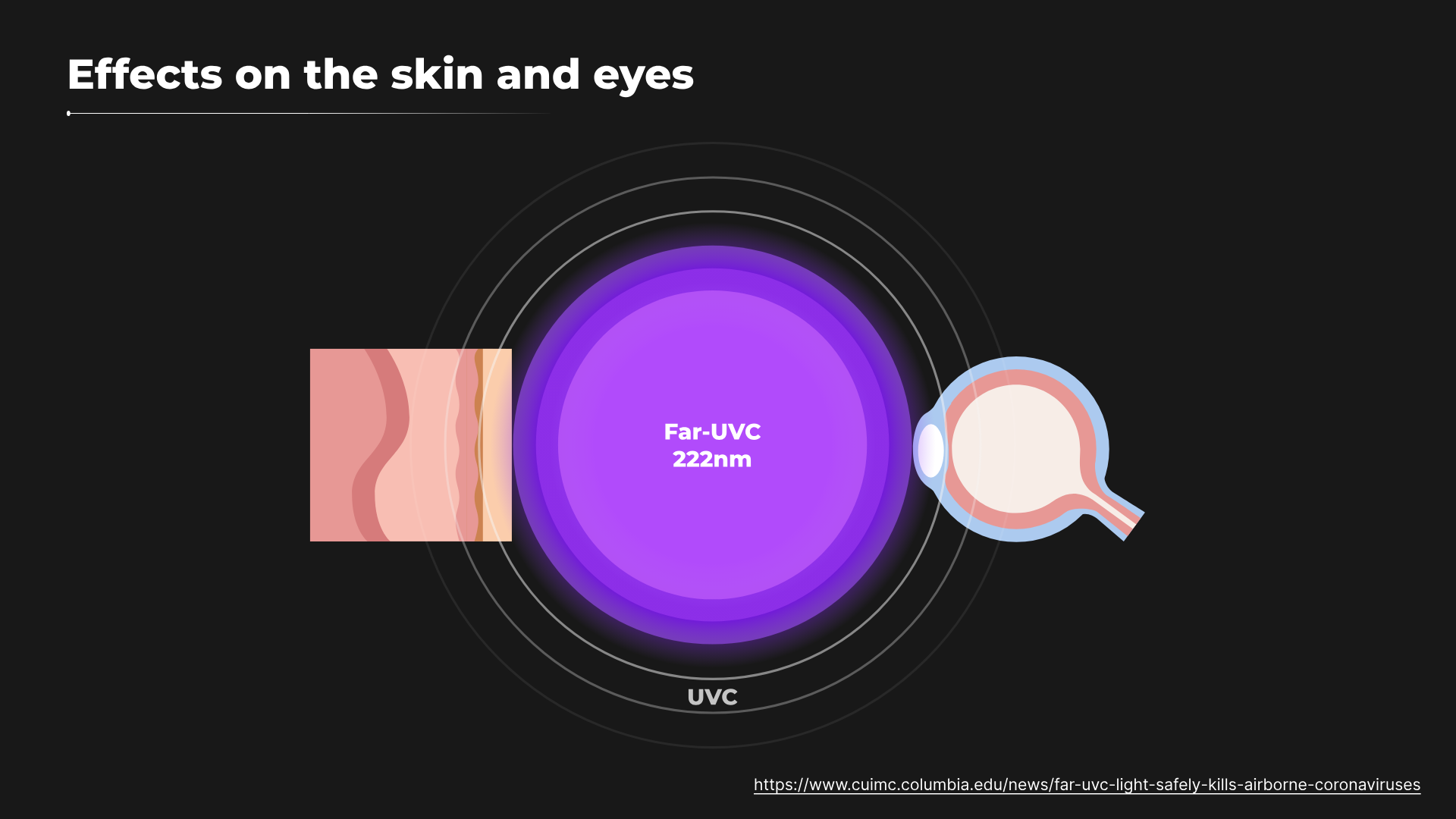
Far-UVC light at 222 nm
Far-UVC light cannot penetrate the tear layer of the eye or the outer dead-cell layer of skin — so it cannot reach or damage living cells in the body. Yet it is strong enough to disable pathogens because they have little to no protective layers.
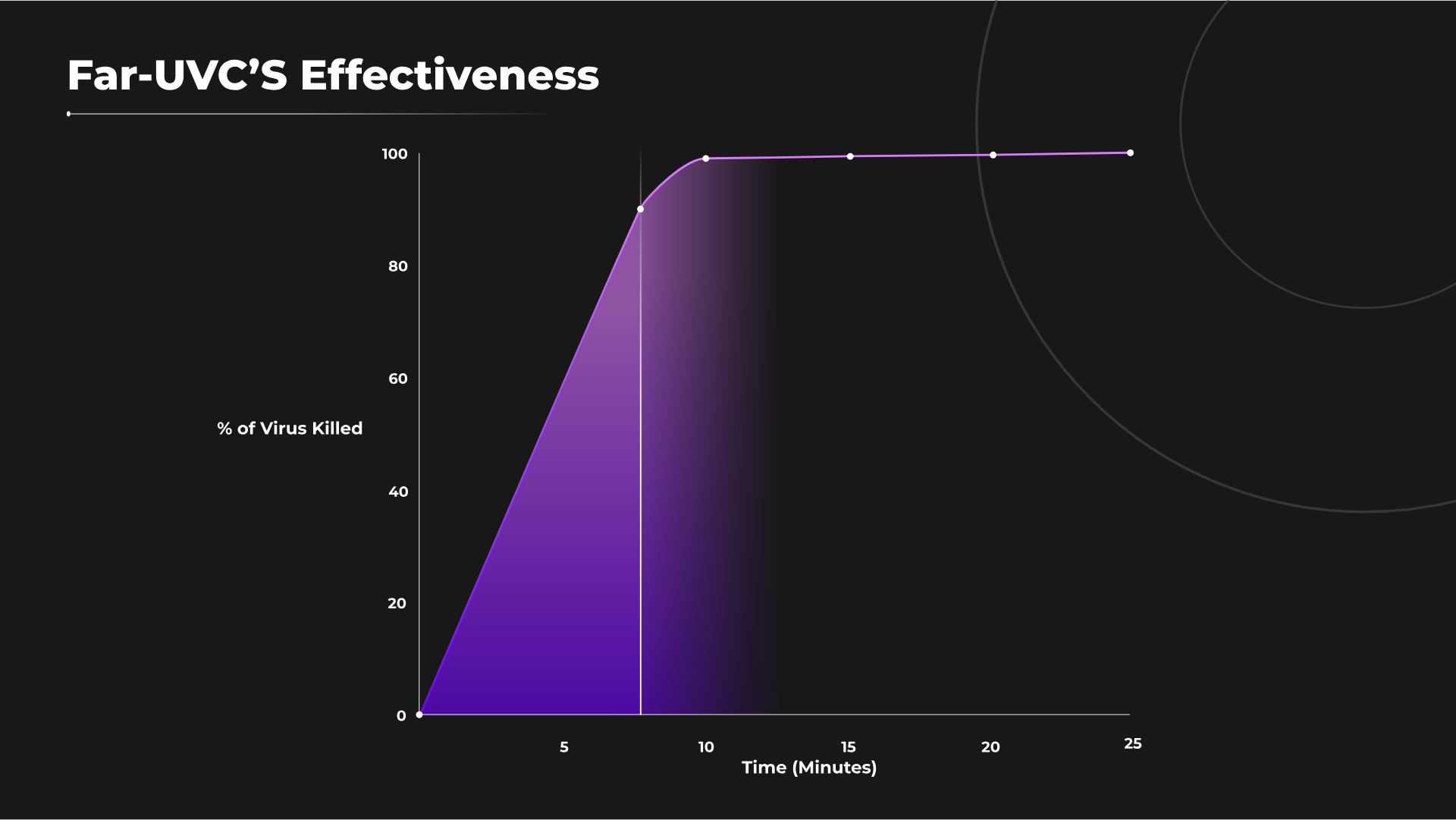
Researchers at Columbia University found that continuous exposure to far-UVC light at the current regulatory limit kills 90% of airborne viruses in 8 minutes, 95% in 11 minutes, 99% in 16 minutes, and 99.9% in 25 minutes. As of June 2020, manufacturers began producing affordable far-UVC products for commercial use.
Technology research
Ideation
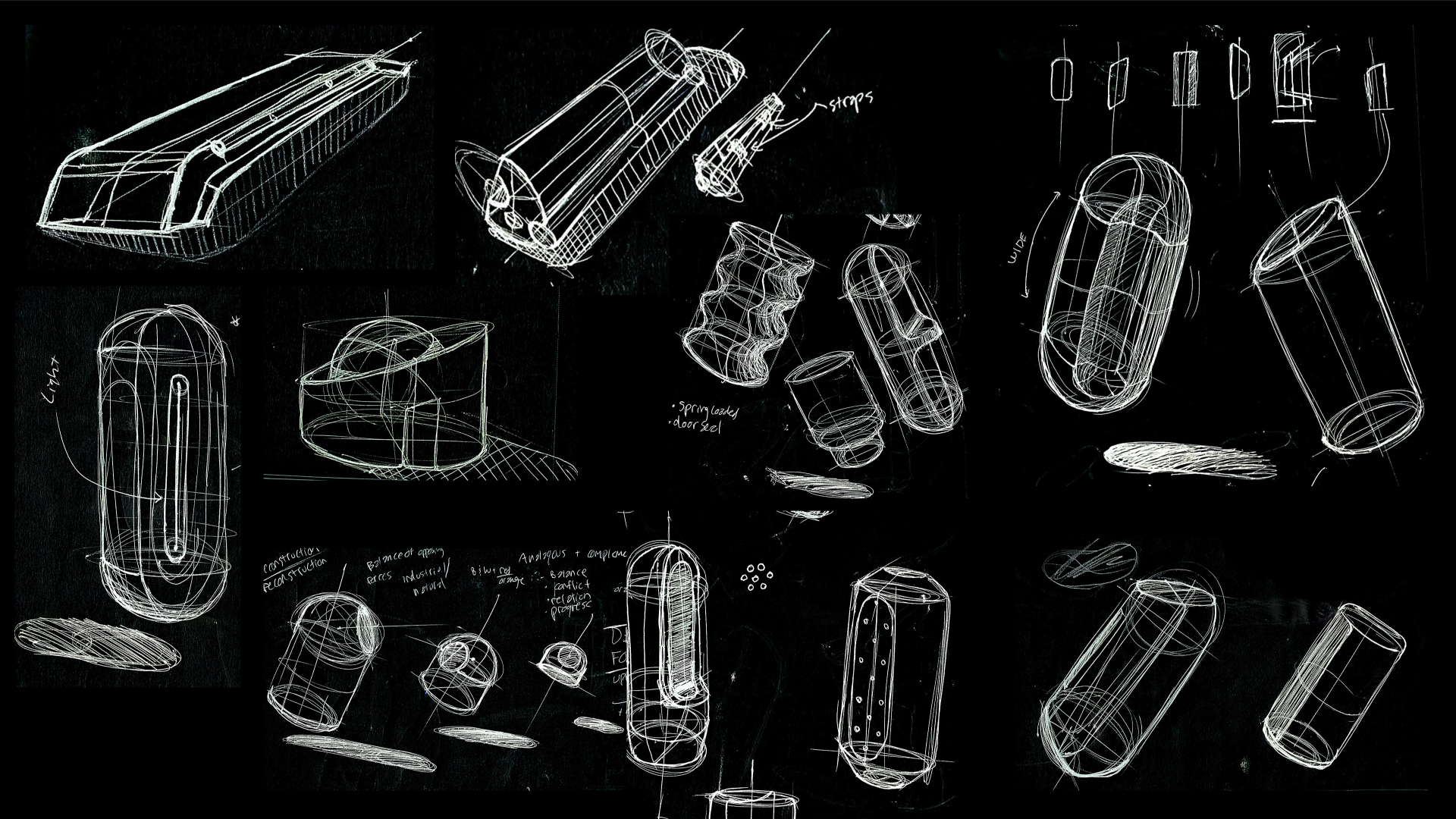
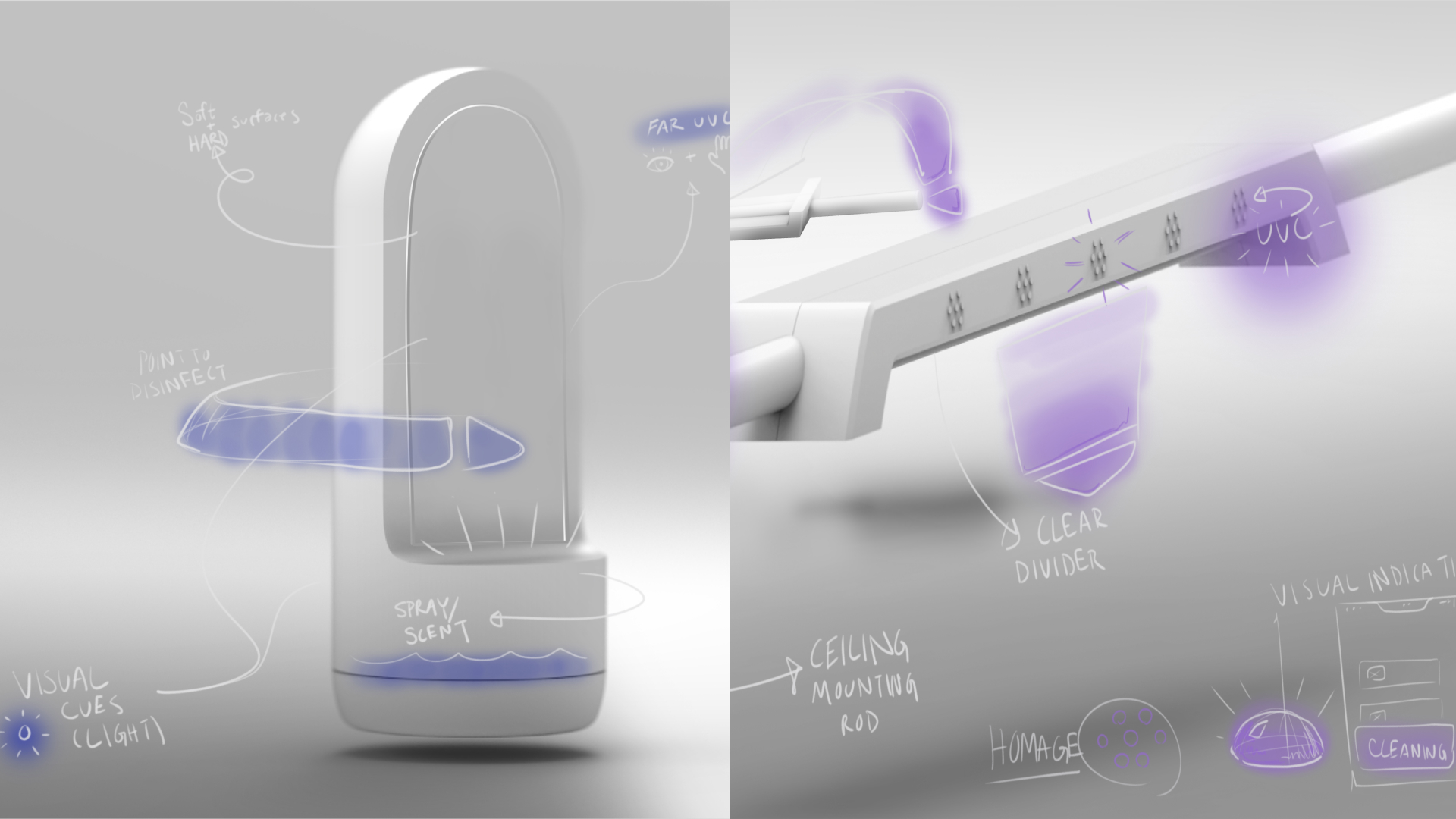
Through lean design thinking, the team focused heavily on the physical product form through crazy eights and concept sketching. Two product-focused designers worked together to ideate the form and interaction of the devices, then refined sketches into 3D models.
For the rideshare app UX, I directed a teammate to implement features within existing rideshare apps rather than creating a separate app. Low-fi wireframes were designed first, then polished into high-fidelity mockups.
Prototyping
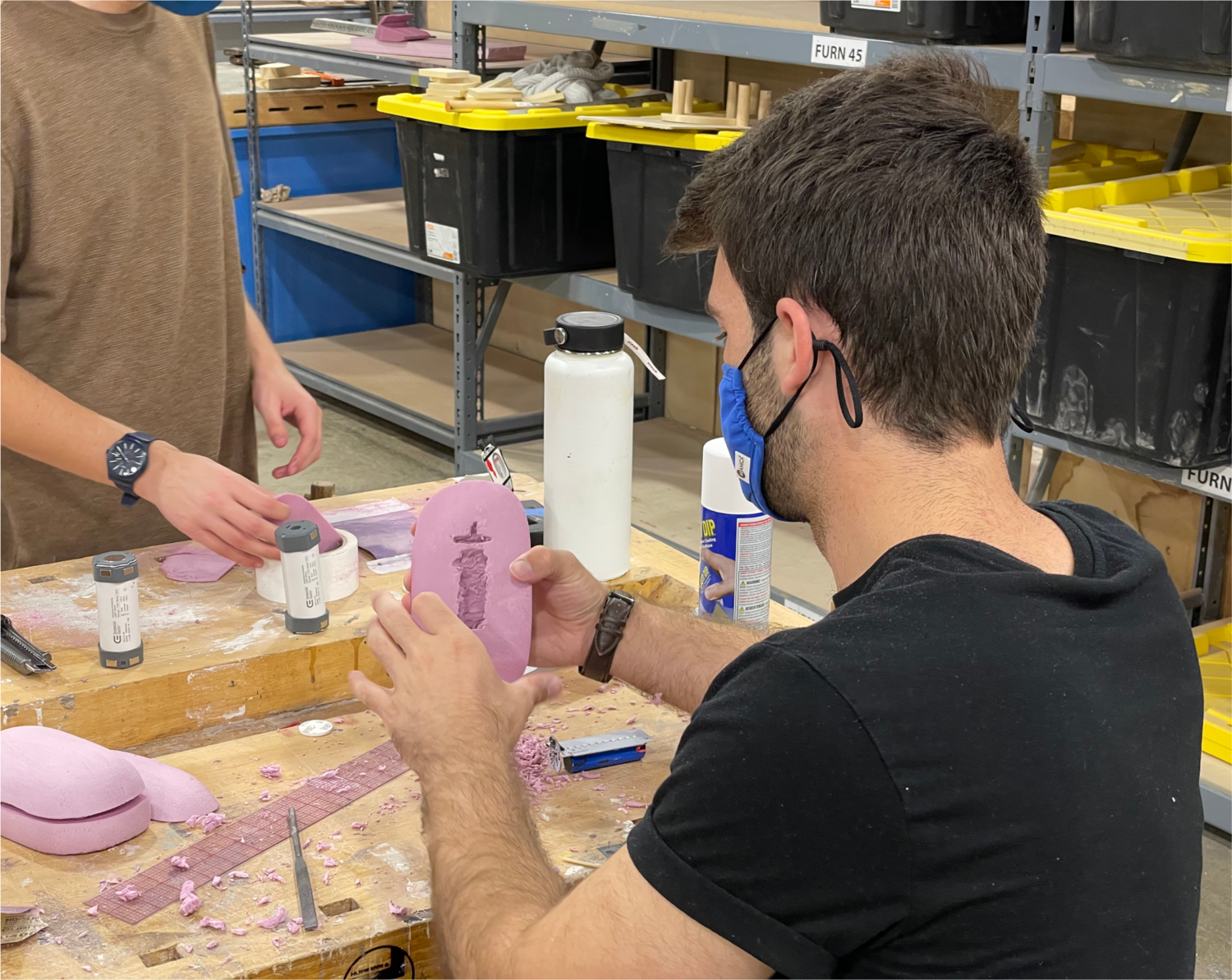
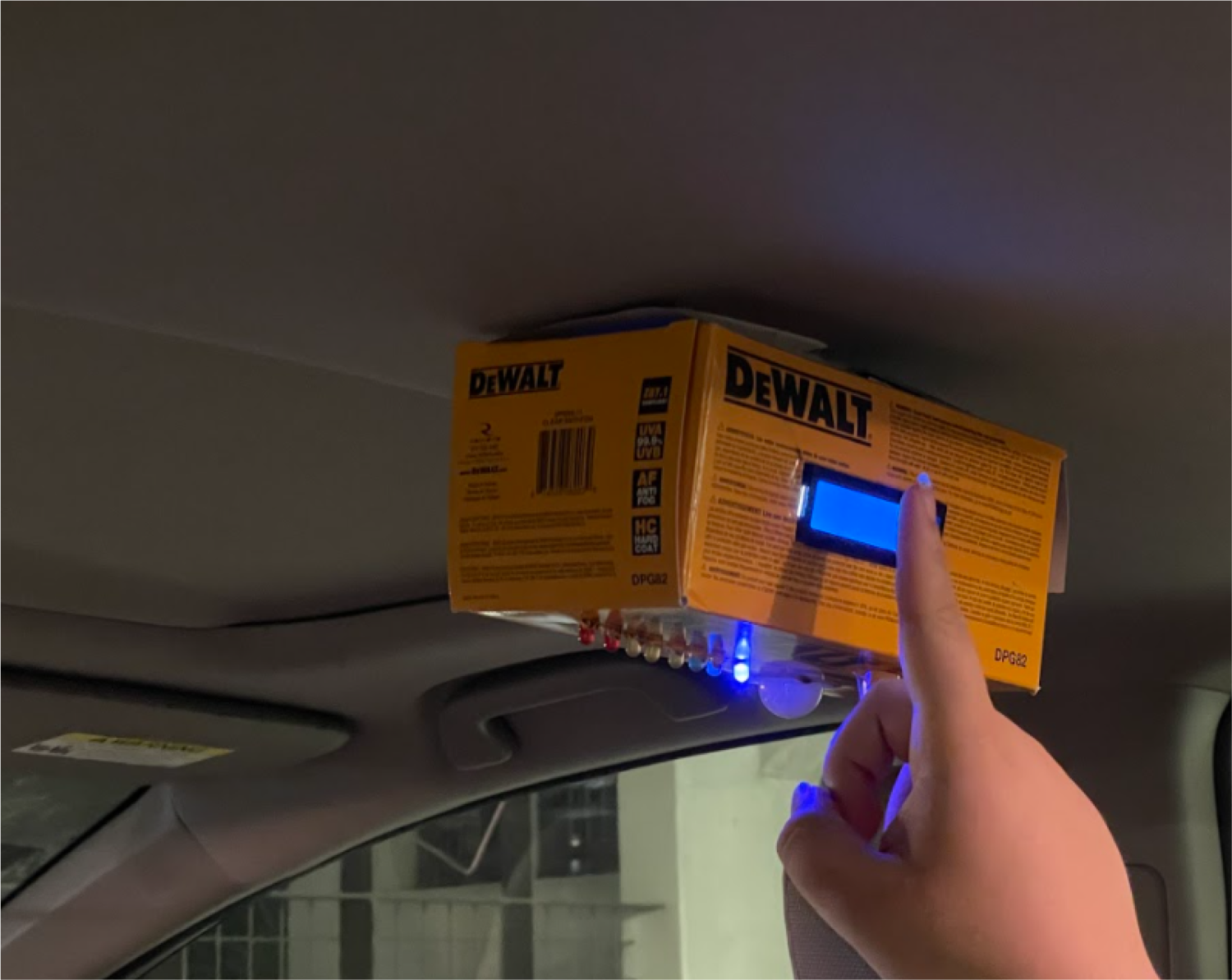
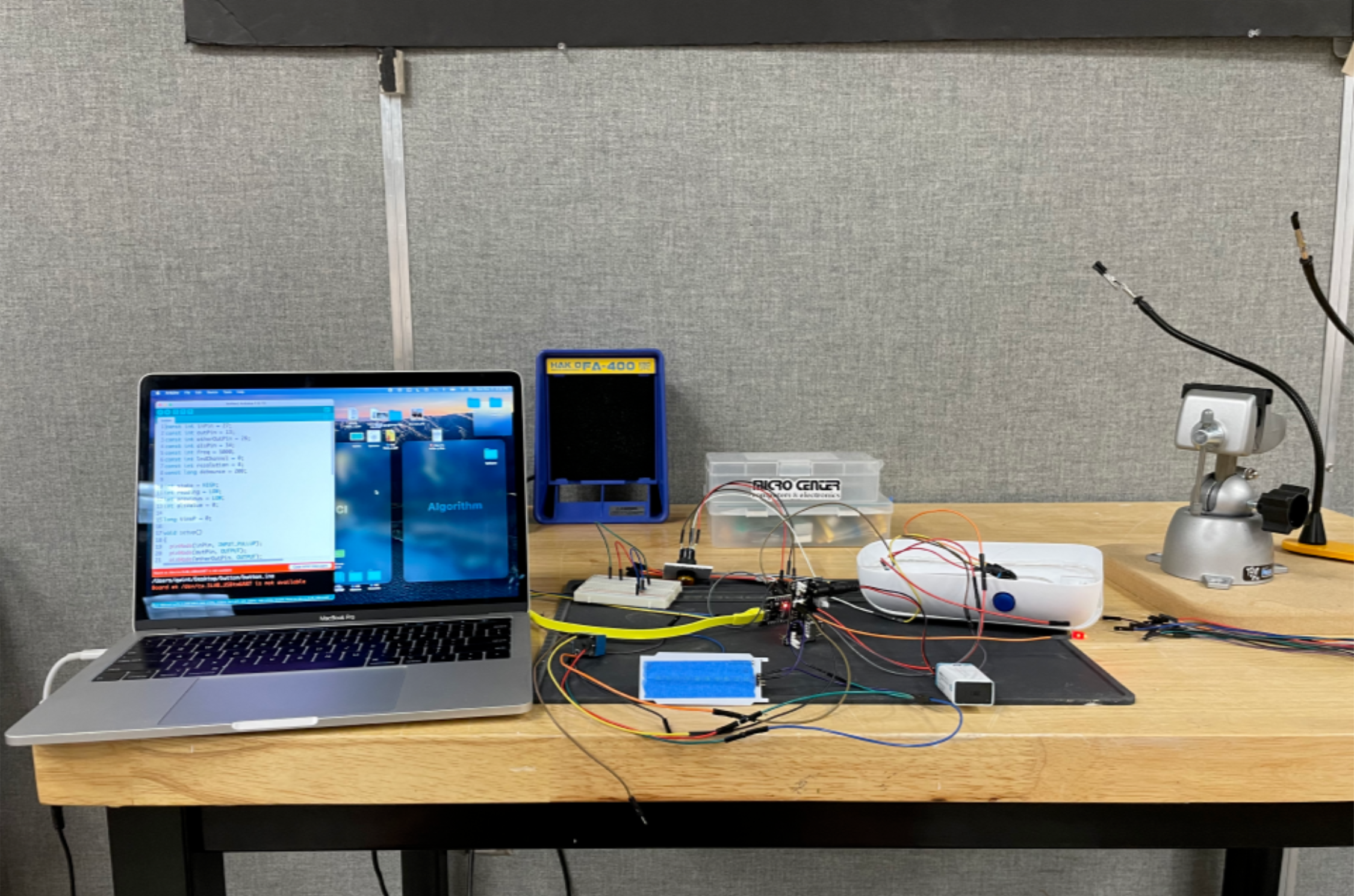
We performed a series of user testing sessions to evaluate device placement and interaction — providing users with scenarios and tasks to interact with the devices both as a driver and passenger.
The solution
Node and Abuv — a far-UVC sanitizing ecosystem
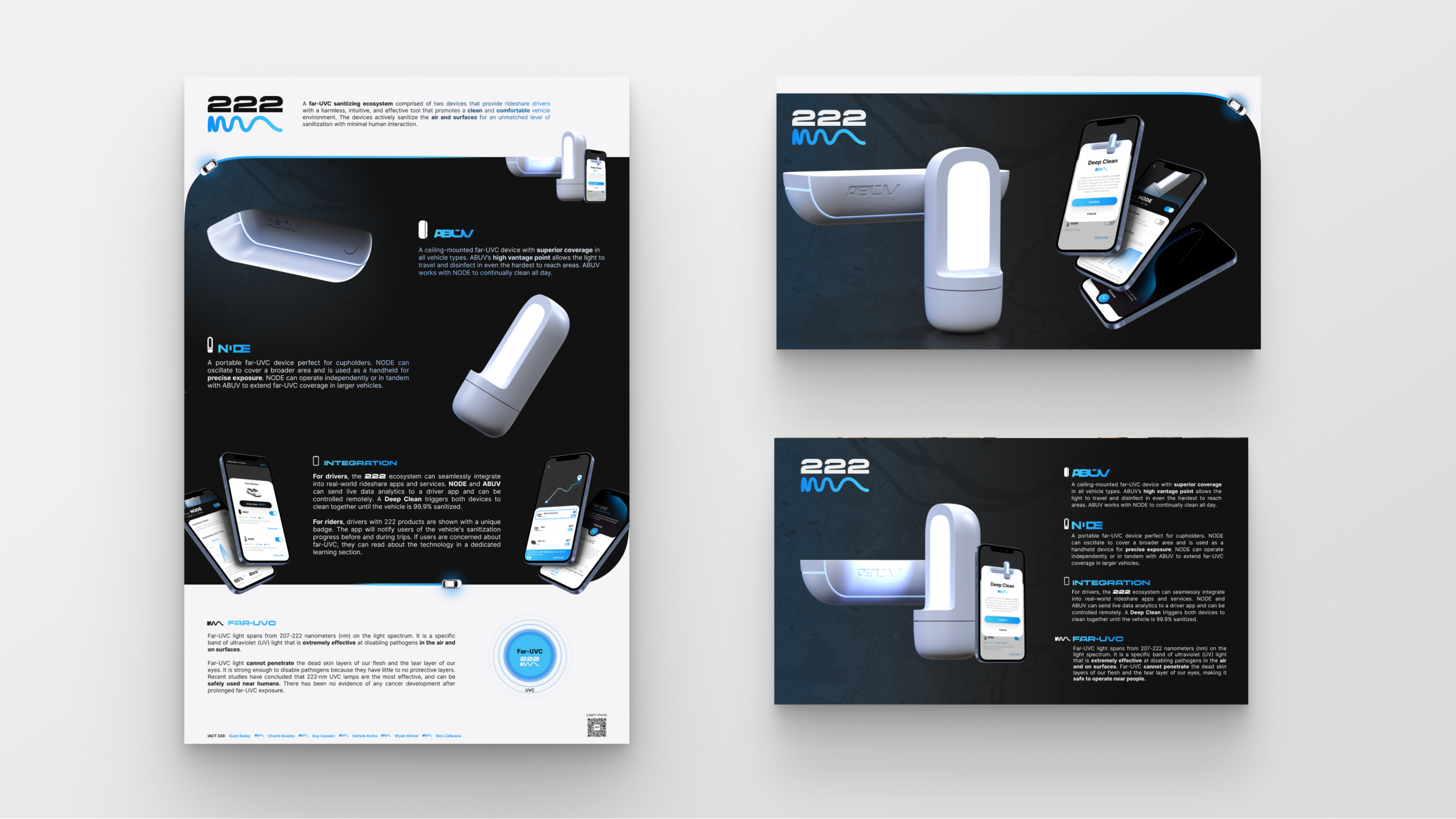
Two devices that provide rideshare drivers with a harmless, intuitive, and effective tool promoting a clean and comfortable vehicle environment. The devices actively sanitize air and surfaces with minimal human interaction.
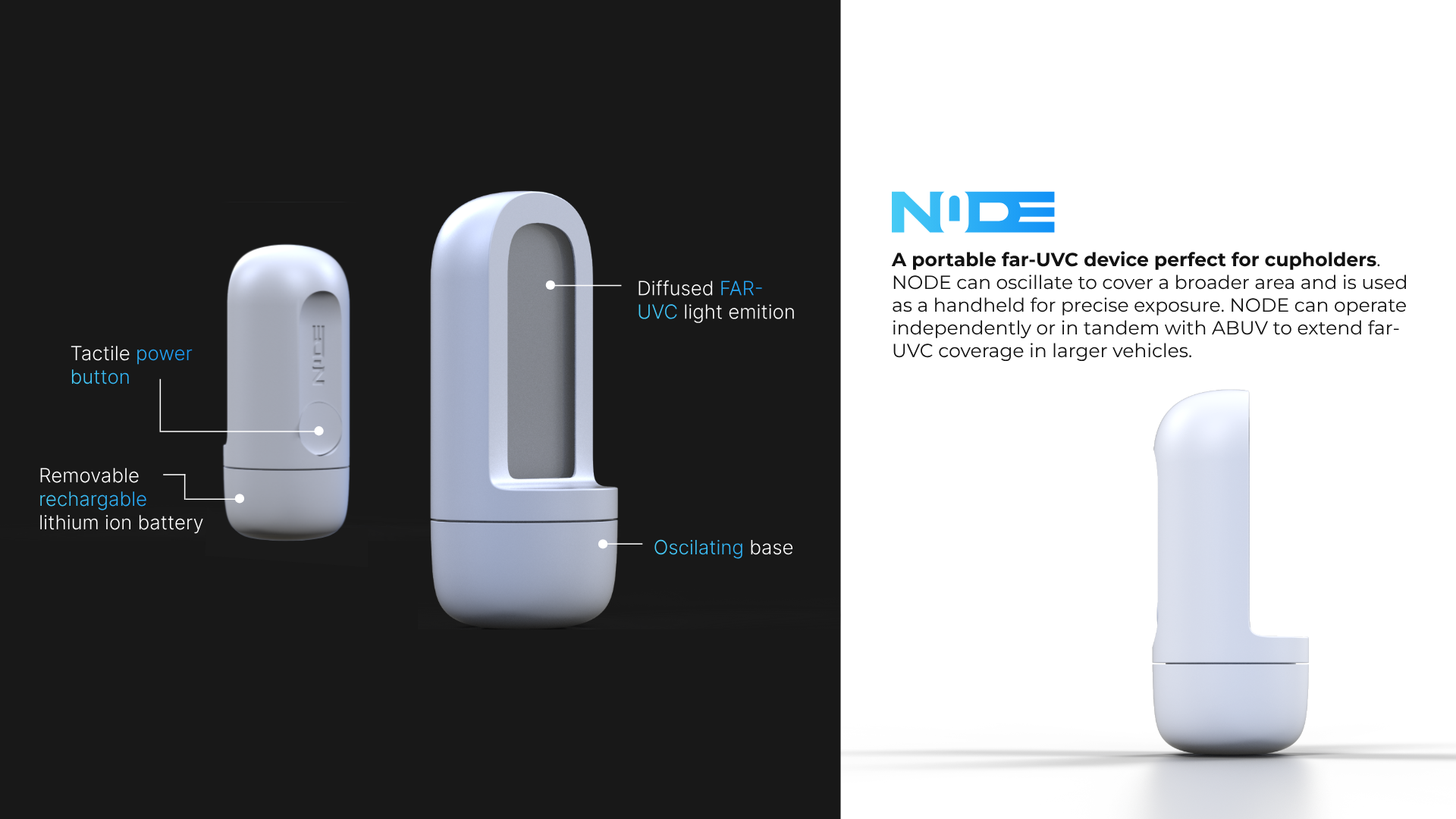
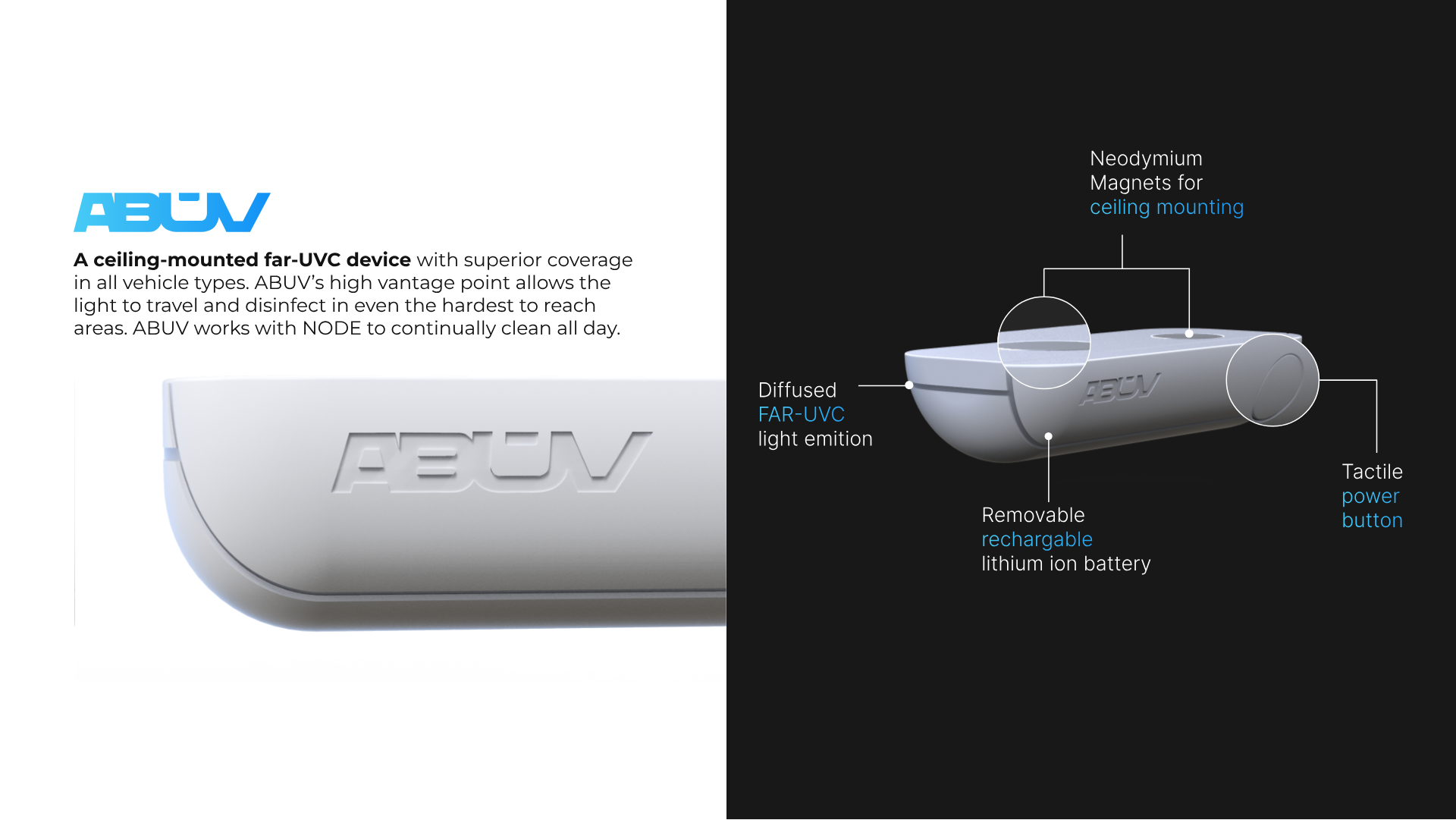
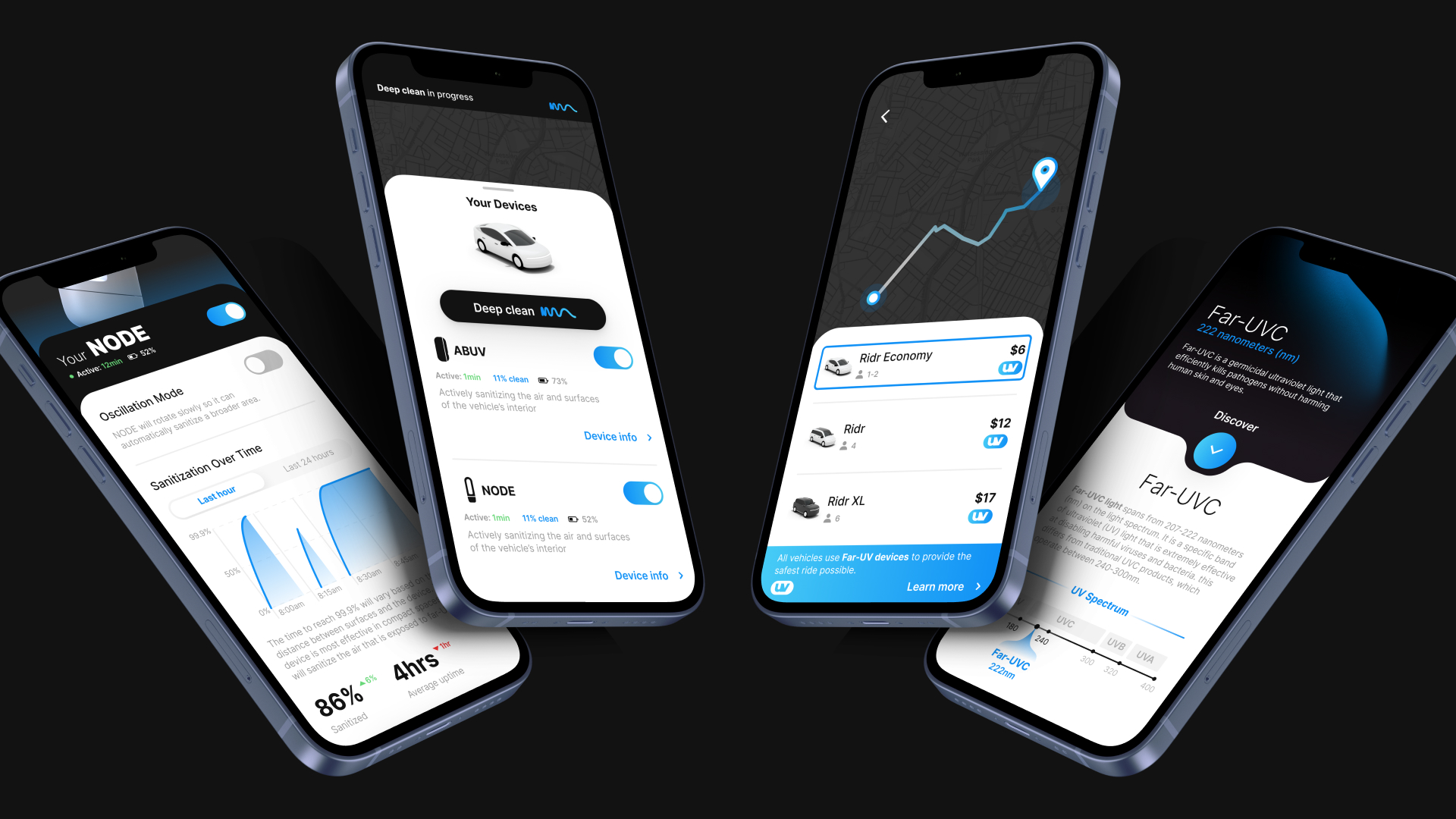
For drivers: The 222 ecosystem integrates into real-world rideshare apps. Node and Abuv send live data analytics to a driver app and can be controlled remotely. A Deep Clean mode triggers both devices to clean together until the vehicle is 99.9% sanitized.
For riders: Drivers with 222 products are shown with a unique badge. The app notifies users of the vehicle’s sanitization progress before and during trips, with a dedicated learning section for far-UVC technology education.
App integration