12
Stakeholders aligned
4
Product pillars defined
8
Enterprise users tested
$11M
B&R first-year revenue enabled
IBM Cloud had no backup and recovery solution for enterprise customers. Technical discussions were underway across engineering, product, and business teams, but there was no shared UX vision, no common language, and no north star to rally around.
I was brought in alongside a UX Architect to build that foundation. The goal wasn’t to ship screens. It was to create the design clarity that would allow product, engineering, and leadership to make aligned decisions before major development and vendor selection began.
The outcome became IBM Cloud Backup and Recovery, launched Q4 2025 across 5 global regions.
Who was in the room
- UX Strategy
- Visual Design
- Workshop Facilitation
- User Testing
- Competitive Analysis
- Vendor Evaluation
There were four teams moving in four directions. No one had a shared picture of what the experience should actually be.
Design team assessment, project kickoff
When I joined this initiative, IBM Cloud had active technical discussions about architecture and MVP scope, but design had no seat at that table yet. The risk was real: decisions that would shape the product for years were being made without a UX point of view.
The deeper problem wasn’t a lack of screens. It was a lack of alignment. Engineering was thinking in technical capabilities. Product was thinking in business requirements. No one had defined what the customer experience should feel like.
Our design team identified this gap early and made a case for a different kind of engagement: before wireframes, before mockups, create the shared vision that would let everyone pull in the same direction.
We grounded the project in two parallel streams: understanding competitors and understanding our own customers.
Competitive analysis across Azure, AWS, GCP, and others revealed consistent patterns and a significant gap. Every major player had a centralized backup hub, but none had built for the unique compliance and governance requirements of highly regulated industries, which was IBM Cloud’s primary market.
Competitive landscape findings
Information Architecture
Competitors built for breadth, not depth. Dashboards showed high-level job counts but lacked the granular visibility enterprise customers need to manage complex, multi-workload environments.
Market Opportunity
Highly regulated industries were underserved. None of the major players provided the compliance, reporting, or audit trail features IBM Cloud's target customers required.
Design Direction
Template-based deployable architectures were common in adjacent tools but absent from backup products, a pattern we identified as a way to reduce setup friction for enterprise admins.
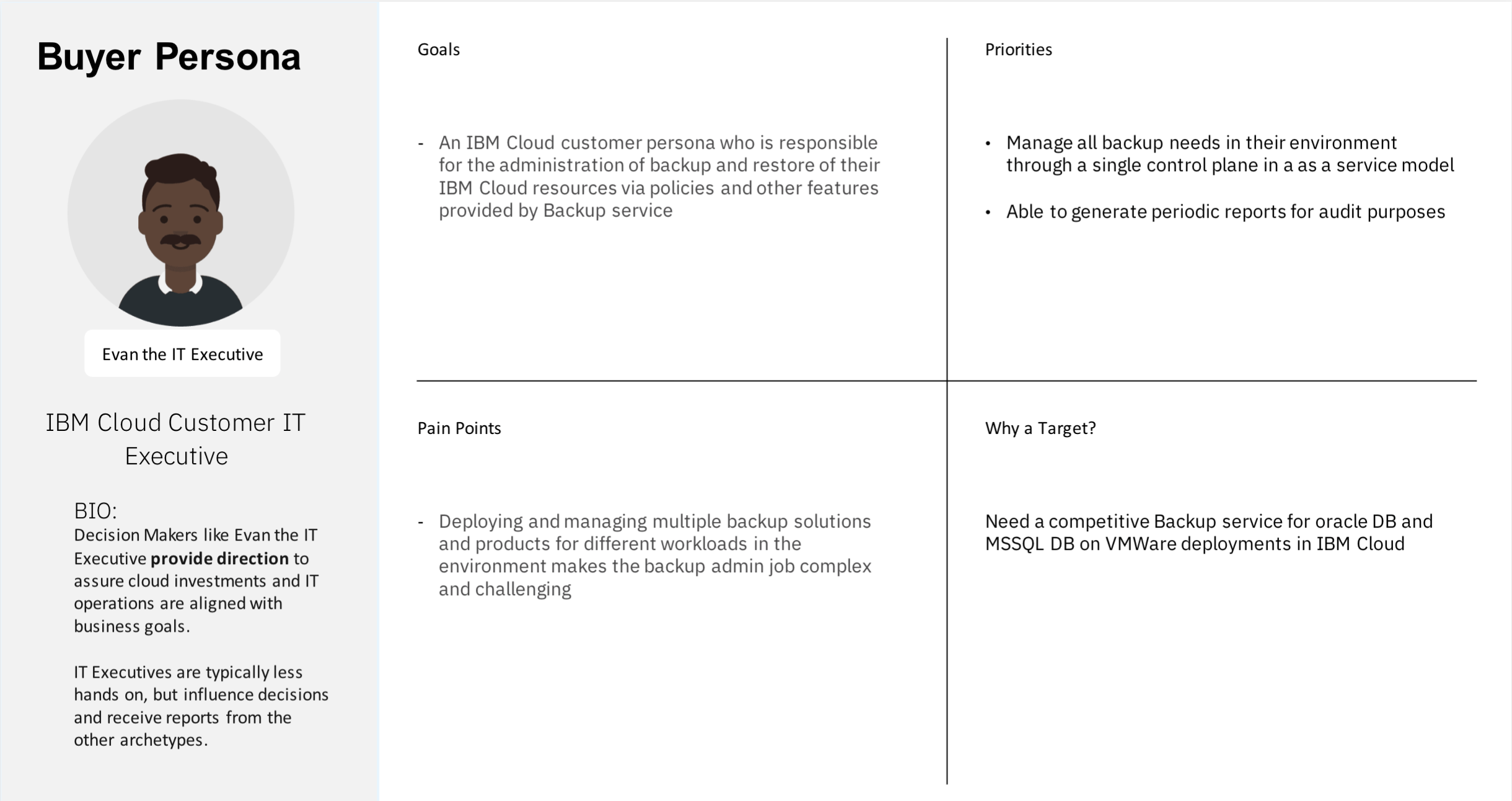
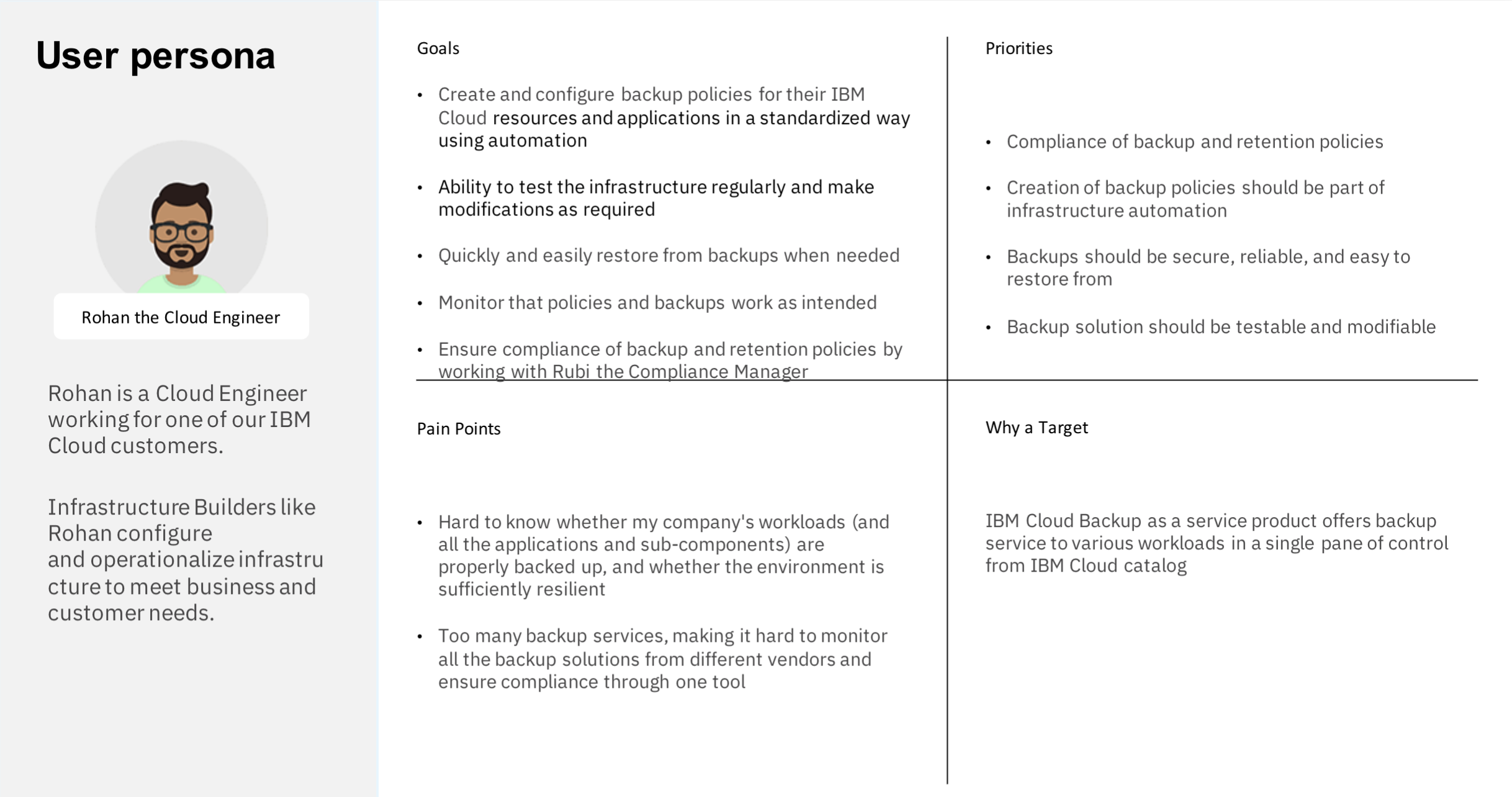
Persona development with internal SMEs gave us buyer and user archetypes grounded in real IBM Cloud customer contexts, not assumptions.
Research artifacts
-
Goal definition with stakeholders
We opened with structured discussions with senior stakeholders to map the four product pillars: Discover, Manage & Monitor, Configuration, and Scalability. This gave the design team a clear scope and the stakeholders a shared vocabulary.
-
Competitive experience review
Systematic analysis across Azure, AWS, GCP, and adjacent players. We focused on initial setup flows, dashboard information architecture, policy configuration, and recovery experiences: the four areas most relevant to our target users.
-
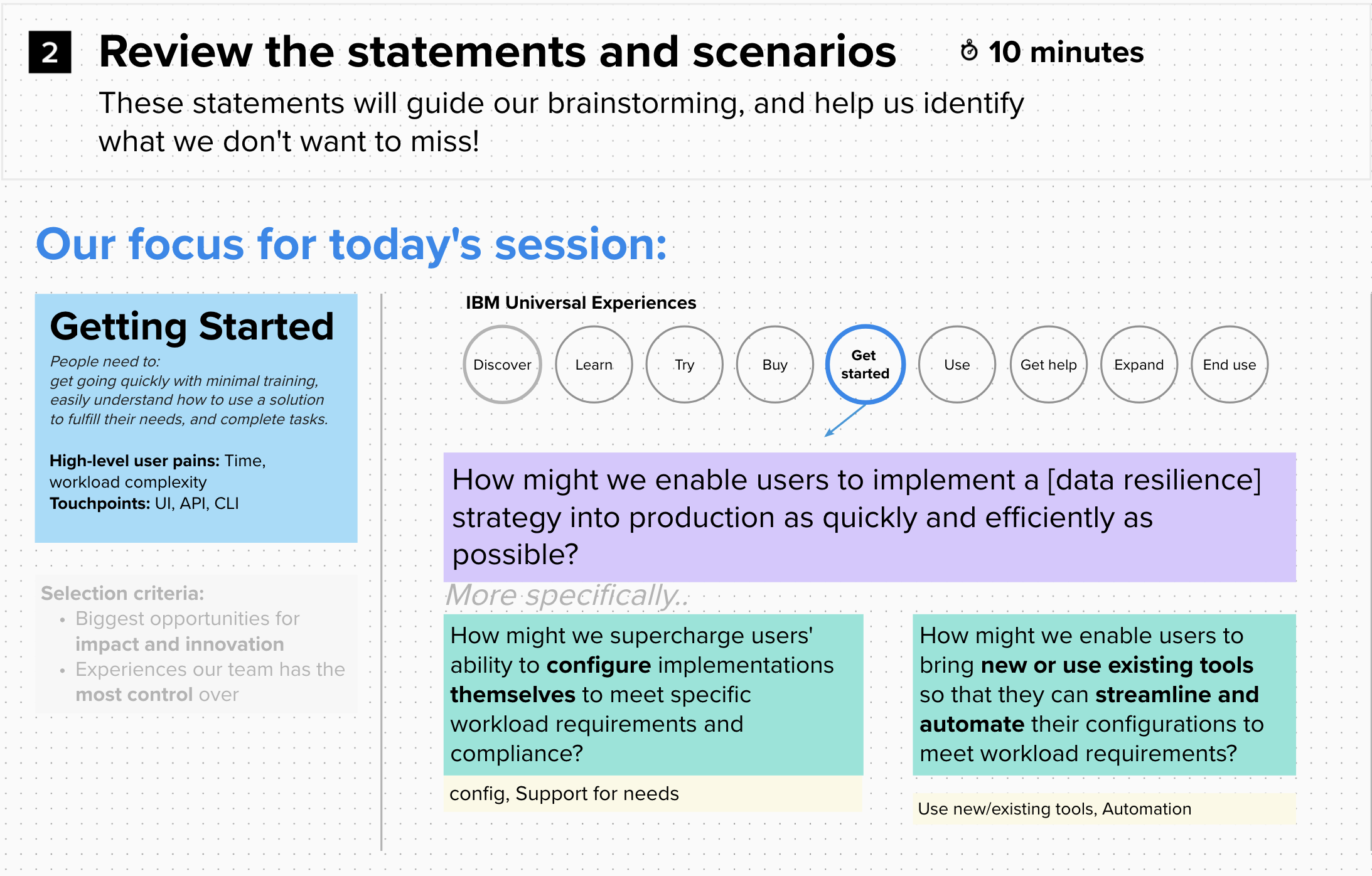
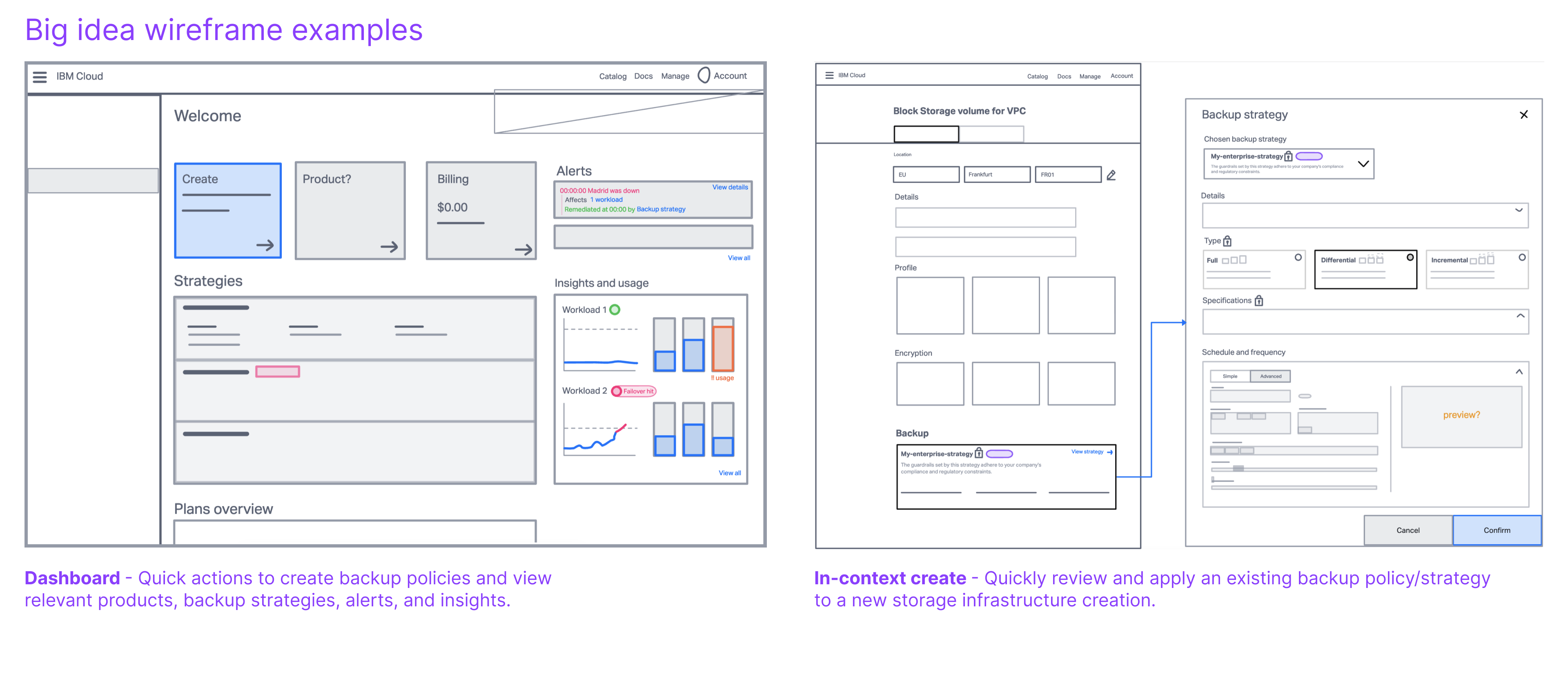
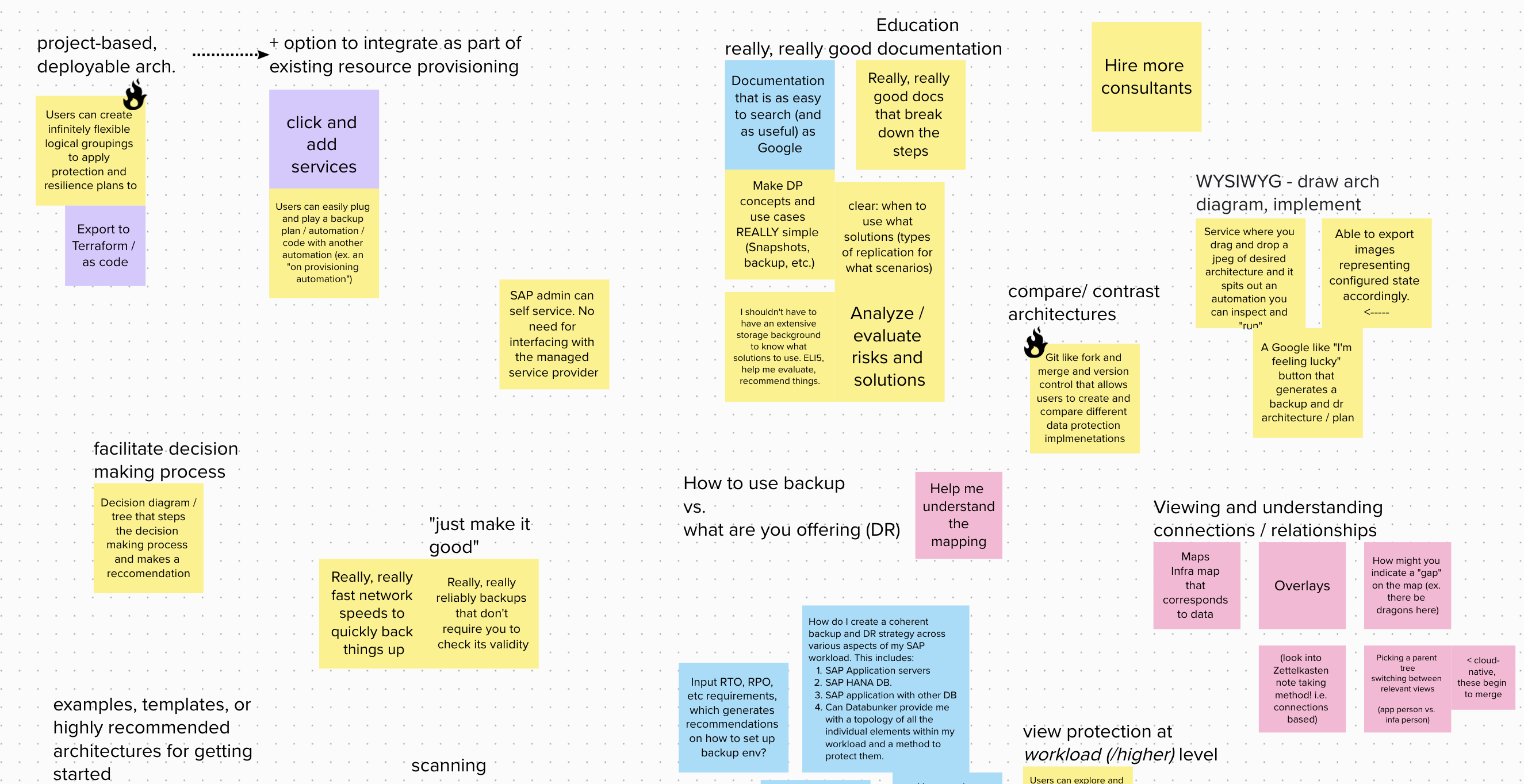
Big Ideas workshop — 12 stakeholders
I proposed and facilitated a cross-functional design thinking workshop to generate ideas that could influence product decisions at every stage of the roadmap. Participants included designers, STSMs, PMs, and development leadership.
-
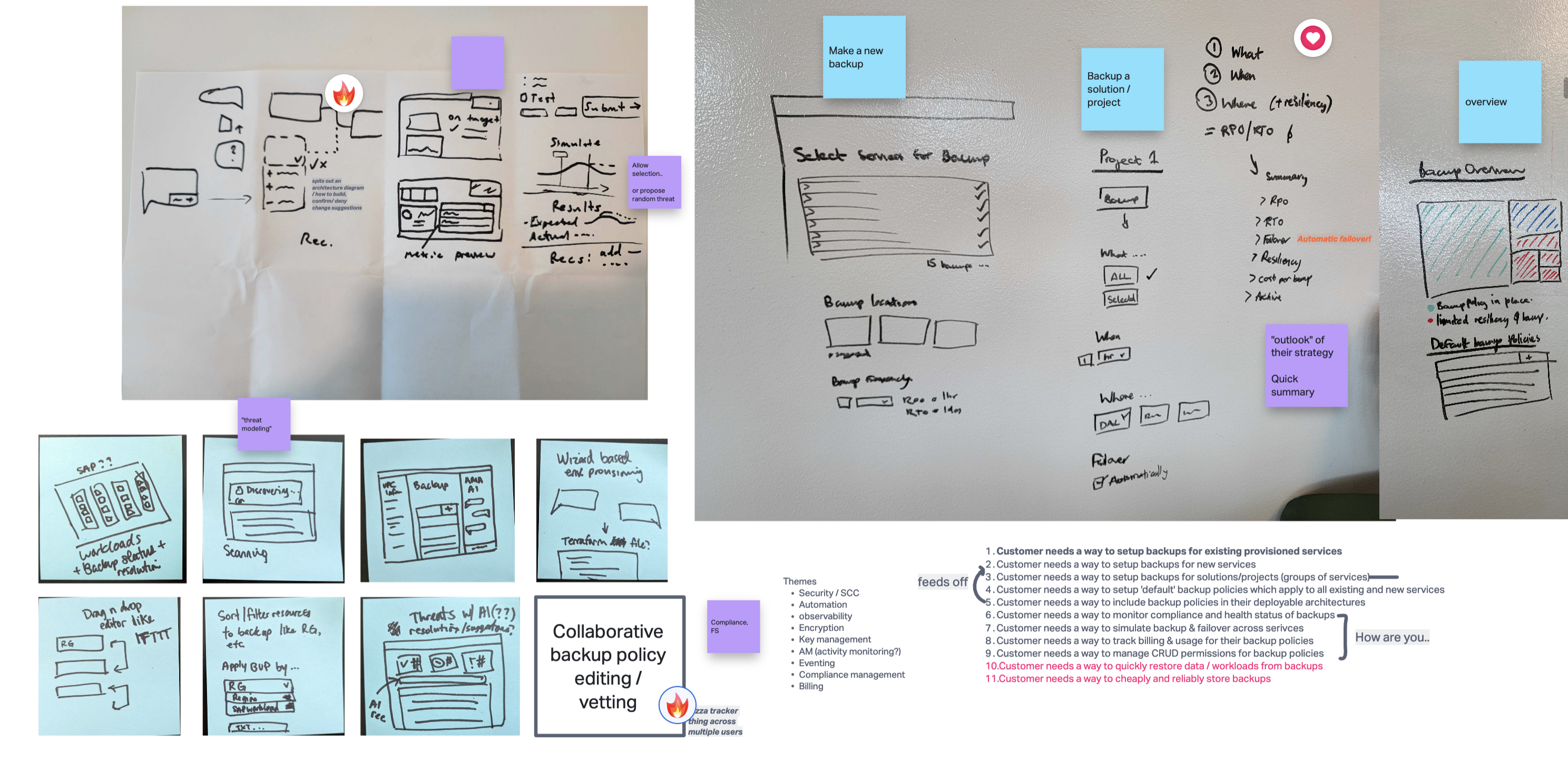
Crazy Eights — rapid UI ideation
With insights from the workshop and competitive review, I ran Crazy Eights exercises with the extended design team to rapidly explore UI directions at low fidelity before committing to any single approach.
-
User testing at IBM TechXchange
I designed an unmoderated test plan for IBM's annual TechXchange conference, where 8 enterprise customers evaluated a clickable Figma prototype of the policy configuration flow. The research team ran sessions; I synthesized findings.
-
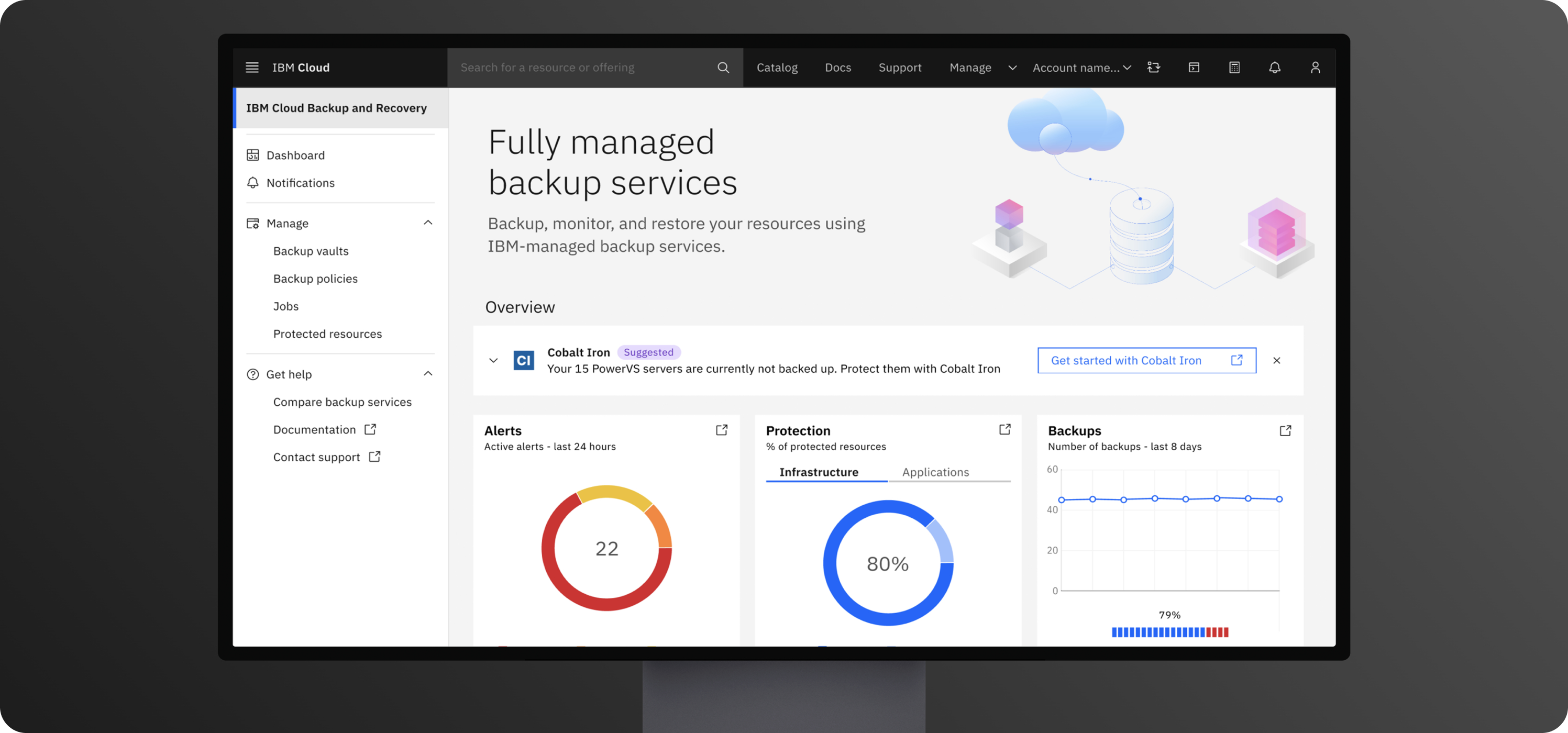
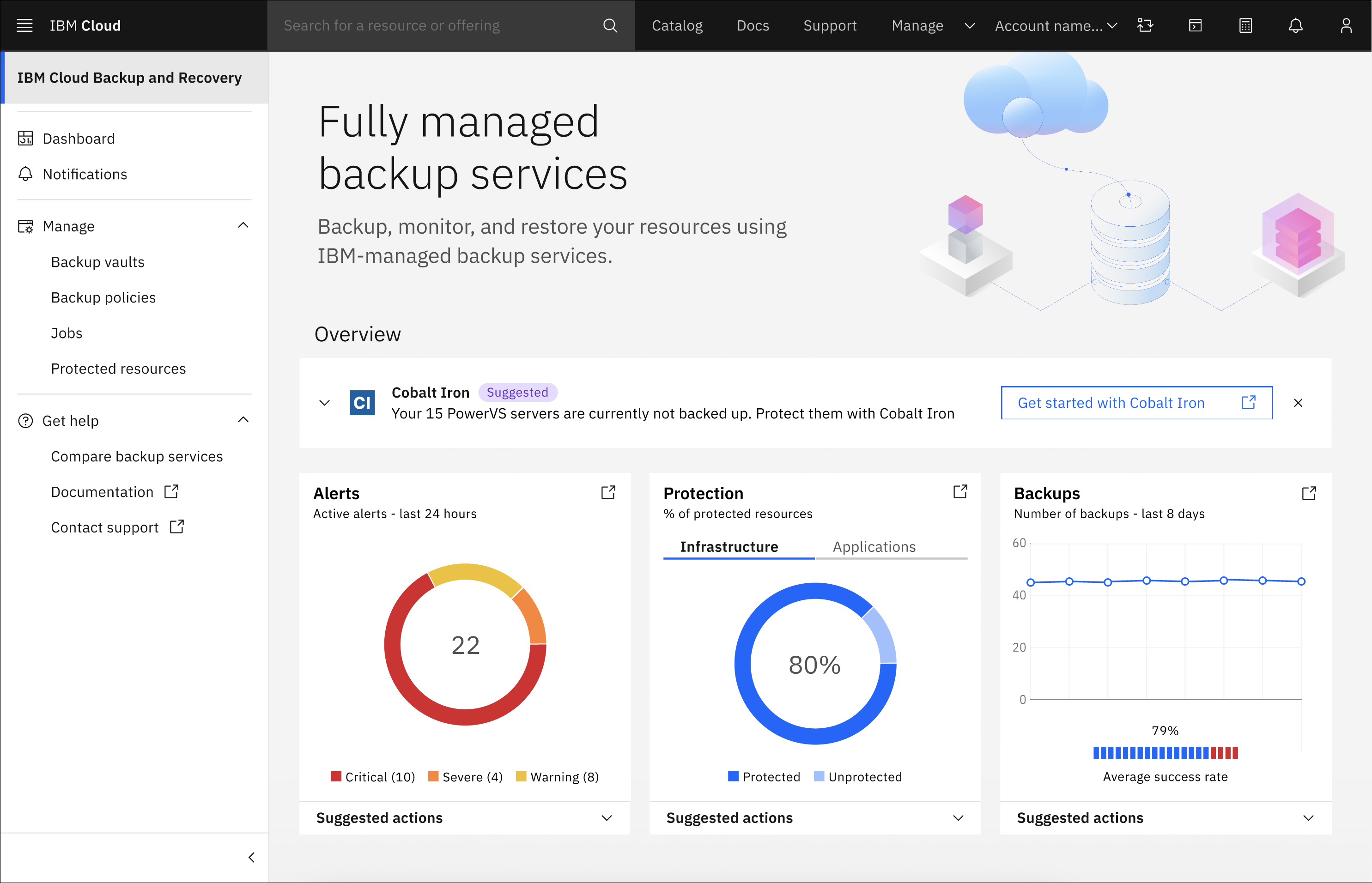
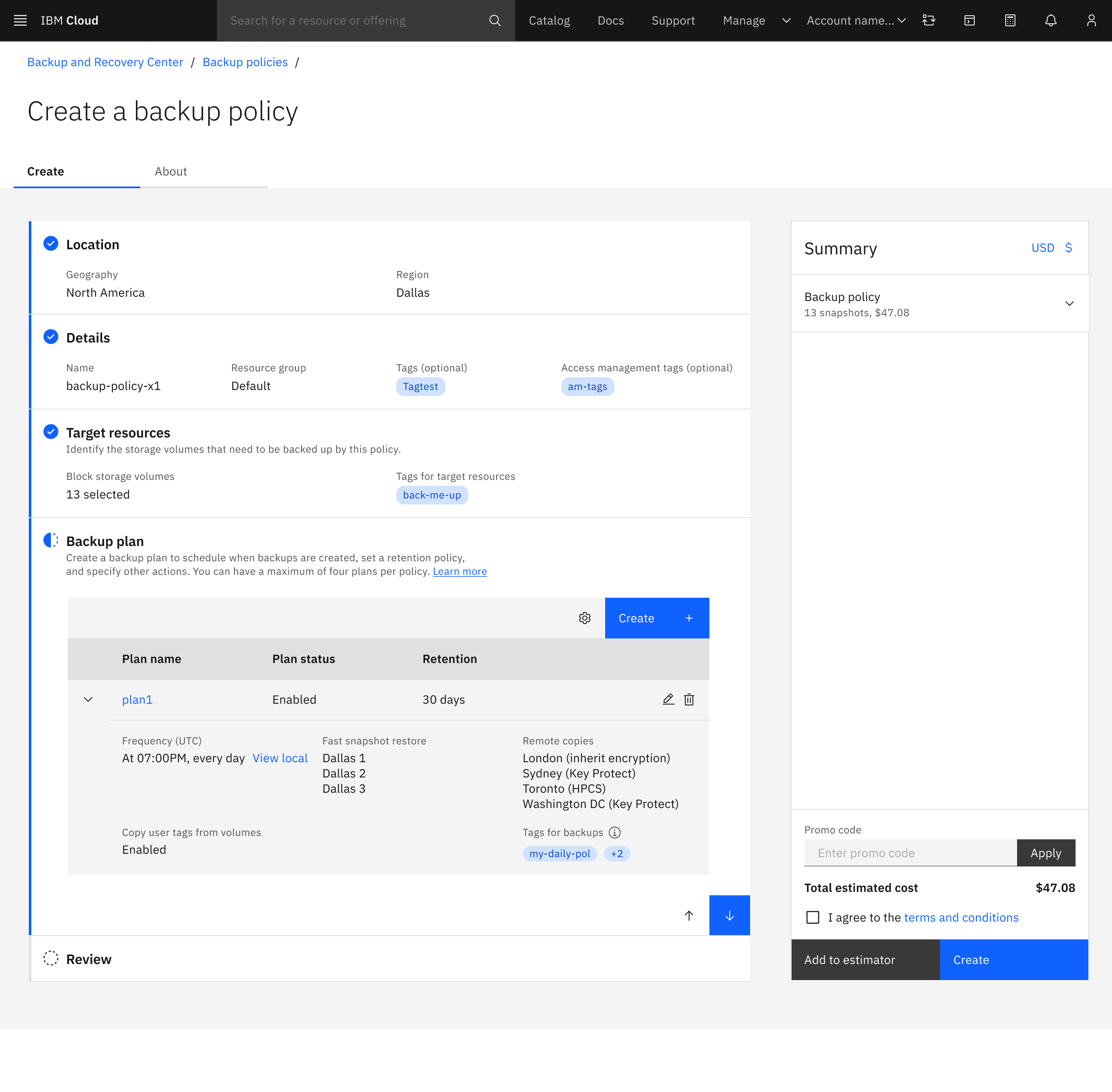
High-fidelity vision designs
Incorporating user feedback, I built high-fidelity mockups using an experimental design language that would influence the future direction of IBM Cloud's UI. These were shared directly with technical leaders and engineers.
High-fidelity vision designs
One of the most consequential decisions this work informed was vendor selection for the eventual IBM Cloud Backup and Recovery product.
Early in the project, IBM began exploratory discussions with a potential technology vendor. As UX leads, we joined those sessions to assess the vendor’s experience model and development capabilities, not just their technical specs.
Design Decision
Vendor evaluation — UX perspective
| Option | UX Maturity | Enterprise Fit | Dev Flexibility | Compliance Coverage | Status |
|---|---|---|---|---|---|
| Vendor A — Initial candidate | |||||
| Vendor B — Selected partner | Chosen |
Rationale
UX input directly influenced the decision to evaluate and ultimately select Vendor B. The vision work we had produced gave the product team a clear benchmark to evaluate against, making the comparison concrete rather than subjective.
The design vision artifacts weren’t just for internal alignment. They became evaluation criteria. Having a defined UX north star meant vendor capabilities could be assessed against something real.
The four product pillars and their design principles:
Each pillar produced guiding insights for the product roadmap:
- Discover: Multiple paths to configuration exist; IBM Cloud must guide each customer type to the right starting point. Templates and deployable architectures reduce decision fatigue.
- Manage & Monitor: Single-pane-of-glass visibility across workload types; proactive disaster alerting; automation to reduce manual intervention.
- Configuration: Wide requirement variance across customers; must meet stringent compliance and reporting standards for regulated industries.
- Scalability: Architecture must accommodate additional workload types and features without redesign.
What the work enabled
Design as the foundation, not the finish line.
The deliverable from Project Databunker wasn't a final UI. It was a shared understanding: a north star that let 12 stakeholders, two design teams, and multiple engineering groups move forward in the same direction.
The immediate outcomes:
- Product roadmap alignment: UX vision, technical feasibility, and strategic business objectives aligned before major development commitments were made
- Vendor selection influence: Design perspective directly contributed to the decision to pursue a different vendor, saving the product team from a misaligned partnership
- Foundation for B&R: The vision work, personas, and design principles became the specification that IBM Cloud Backup and Recovery was built against
IBM Cloud Backup and Recovery launched in Q4 2025 across 5 global regions. Databunker was the work that made that possible.
The hardest lesson was assuming verbal agreement was the same as commitment. After the Big Ideas workshop, the team expressed genuine support for the direction. I didn’t press to make that support formal. Product management and engineering never signed onto the vision in writing, and when execution pressure arrived, interpretations drifted. I should have been more assertive about converting workshop momentum into documented, written direction.
The lesson: Initial enthusiasm isn’t commitment. Written sign-off, even for strategic vision work, creates the accountability that sticks when priorities shift.
On division of labor: I led the vision workshop and the high-fidelity design work. Competitive research was collaborative between myself and the UX Architect, who also shaped the strategic narrative with senior leadership.
Growth arc: The documented alignment lesson carried directly into Backup & Recovery. Rather than relying on verbal buy-in across 233 stakeholders, I built a paper trail of sponsor-user feedback reports, scorecards, and session notes. The real-world evidence from BNPP and QAD became the anchor that made the argument hard to dismiss.